
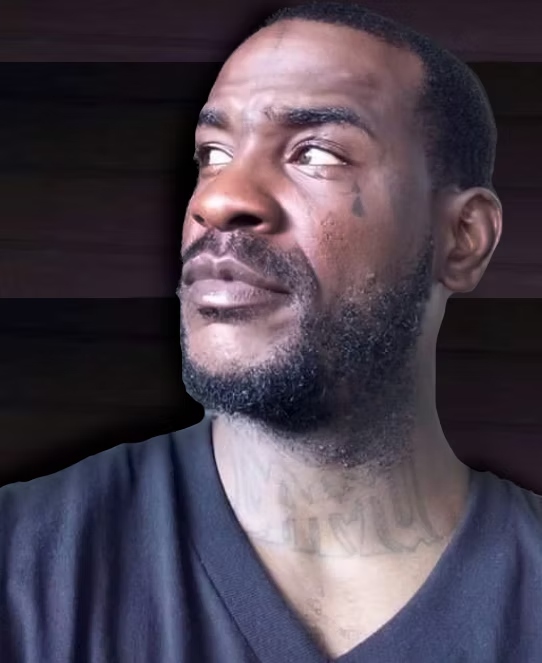
Danny Ray Thomas was a 34 year old man whose life ended tragically during a police encounter in Houston, Texas. His death on March 22, 2018, sparked community concern, raised difficult questions about the use of deadly force, and brought renewed attention to how law enforcement responds to individuals experiencing mental health crises.
Thomas lived at the Lofts at the Lake apartment complex in Houston. According to family members and neighbors, he had been struggling with mental health challenges. Those who knew him described him as a quiet and respectful man who was not known to be violent. In the days leading up to the incident, it appeared that Thomas was experiencing a serious mental health episode.
On the afternoon of March 22, Houston police officers were called to the apartment complex after reports of a man acting erratically. Witnesses said Thomas appeared confused, disoriented, and was behaving strangely, but there were no reports that he was threatening anyone with a weapon or causing harm.
When officers arrived, they found Thomas outside near the apartment complex. He was reportedly barefoot and wearing only shorts, an indication to some observers that he was in distress rather than posing a threat. Officers attempted to make contact with him, but the situation escalated quickly.
According to the official account, Thomas moved toward one of the officers. Within seconds, the officer fired his weapon, striking Thomas. The entire encounter unfolded very rapidly, leaving little time for additional communication or de-escalation efforts.
Emergency medical personnel were called, but Thomas died at the scene. Authorities later confirmed that he was unarmed at the time of the shooting.
The death of Danny Ray Thomas immediately raised concerns among family members, community leaders, and activists. Many questioned whether the situation could have been handled differently, especially given that the call involved a man displaying signs of mental distress rather than criminal behavior.
His family expressed deep grief and frustration, stating that Thomas needed medical and mental health assistance, not a fatal police response. They called for greater accountability and emphasized the importance of alternative approaches when dealing with individuals in crisis.
The incident also drew attention to the broader issue of police interactions with people suffering from mental illness. Advocates pointed to the need for expanded Crisis Intervention Team training, which teaches officers techniques for de-escalation, communication, and recognizing signs of mental health emergencies. Others argued for the inclusion of mental health professionals as part of emergency response teams to reduce the likelihood of violent outcomes.
Following the shooting, the Houston Police Department conducted an internal investigation. As is standard procedure in officer involved shootings, the case was also reviewed by the Harris County District Attorney’s Office. A grand jury later declined to indict the officer, meaning no criminal charges were filed.
Although the legal process concluded without charges, the case remained a painful loss for Thomas’s family and an ongoing point of discussion within the community. For many, the outcome reflected a broader national pattern in which fatal police encounters often result in no criminal liability, even when the individual killed was unarmed.
The death of Danny Ray Thomas became part of a larger national conversation about police reform, accountability, and the urgent need to improve responses to mental health crises. Across the country, similar incidents have led to calls for new policies, including specialized crisis response units, increased training in de-escalation, and stronger partnerships between law enforcement and mental health providers.
Today, Danny Ray Thomas is remembered by those who loved him as more than a headline or a case number. He was a son, a friend, and a human being who was struggling and needed help. His story continues to be cited in discussions about the importance of compassion, preparedness, and systemic change.
His death serves as a solemn reminder of the consequences when mental health emergencies intersect with law enforcement and underscores the ongoing need for solutions that prioritize safety, understanding, and the preservation of life.