
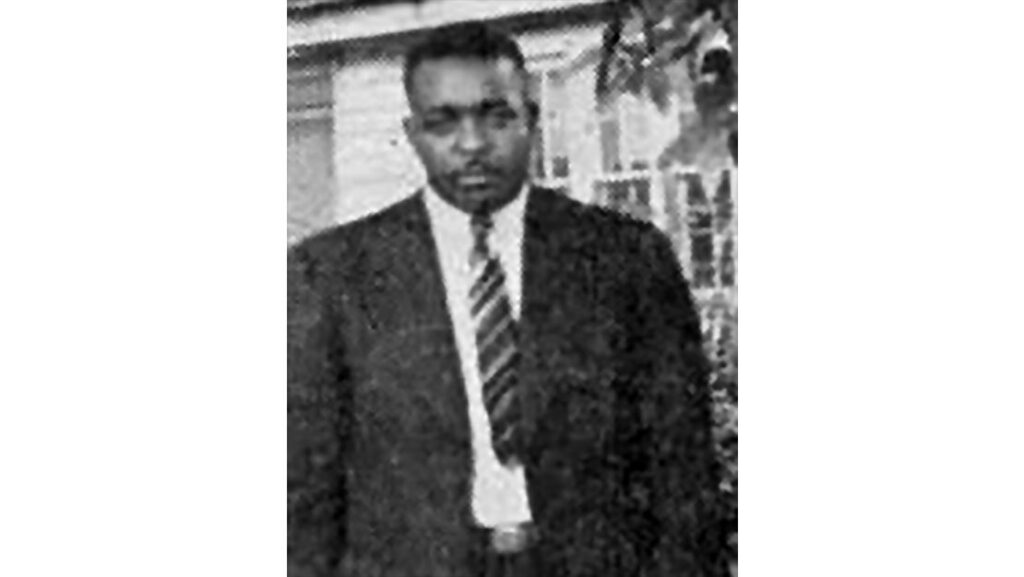
Elbert Williams was a Black civil rights activist whose life was cut short by racial violence in 1940, during a period when African Americans in the South faced extreme danger for challenging segregation and voter suppression. His killing stands as one of the earliest acts of deadly retaliation against organized civil rights work in the United States and revealed how deeply entrenched white supremacy was in local governments and law enforcement.
Williams lived in Brownsville, Tennessee, in Haywood County, where he worked as a farm laborer. Though his work was physically demanding and offered little economic security, he was determined to improve conditions for Black families who were trapped in a system designed to deny them political power and basic rights. In 1940, Williams became involved in organizing a local chapter of the National Association for the Advancement of Colored People. Alongside other Black leaders, he focused on encouraging African Americans to register to vote, an act that was legally permitted but violently opposed in practice.
At the time, Haywood County was controlled by white officials who used intimidation, economic retaliation, and terror to maintain racial control. Black residents who attempted to vote risked losing their jobs, being evicted from their homes, or worse. As the NAACP organizing efforts gained attention, Williams and others were placed under surveillance, questioned by authorities, and openly threatened. The presence of Black political organization was viewed as a direct challenge to the existing power structure.
On June 16, 1940, Elbert Williams was taken from his home by white men, believed to include local law enforcement officers. He disappeared that night, and his body was later found in the Hatchie River. Evidence showed that he had been beaten before his death, making it clear that he was murdered rather than killed by accident. Despite the brutality of the crime, no meaningful investigation followed. Local officials dismissed calls for justice, and no one was ever charged.
The lynching of Elbert Williams had an immediate and chilling effect on the Black community in Haywood County. Many African Americans fled the area out of fear, while others were forced into silence. The killing was meant to send a message that organizing, voting, and demanding equality would be met with deadly consequences. It also exposed the role of local authorities in either participating in or protecting acts of racial violence.
National civil rights leaders recognized the significance of Williams’s death. The NAACP documented the case and used it to demonstrate how Black Americans were denied protection under the law, even when exercising constitutional rights. His murder is often cited as the first lynching of an NAACP organizer, marking an early chapter in the long and dangerous struggle for civil rights.
Elbert Williams is remembered today as a symbol of courage and sacrifice. His efforts to secure voting rights and dignity for Black citizens came at the ultimate cost, yet his story continues to highlight the reality of racial terror in America and the bravery of those who resisted it long before the modern civil rights movement took shape.