
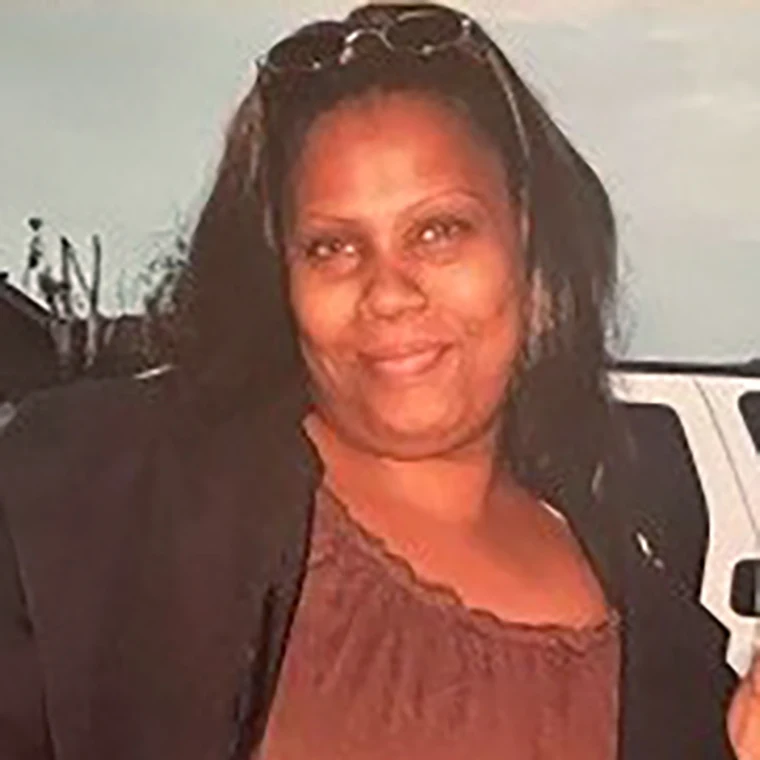
The death of 54 year old Tracy Gaeta during a police encounter in 2022 drew attention in California and raised questions about police use of force, accountability, and how law enforcement responds to high stress situations involving civilians. Gaeta’s family described her as a loving mother and grandmother, but her life ended after a confrontation with officers from the Stockton Police Department in Stockton.
On the evening of February 22, 2022, events unfolded that would ultimately lead to Gaeta’s death. According to authorities, the situation began when Gaeta’s vehicle collided with a patrol car driven by an officer from the Stockton Police Department. The crash reportedly occurred near Charter Way and Interstate 5. Officials said that after the collision, Gaeta drove away from the scene, which led officers to begin pursuing her vehicle through parts of the city.
Police reports later stated that the pursuit continued for several minutes. Officers claimed that during the chase Gaeta ran a red light and continued driving despite attempts to stop her. Eventually, the vehicle turned onto Rolerson Road, an area that ended in a dead end. Officers moved in to block the vehicle and bring the pursuit to an end.
What happened in the moments that followed would become the central point of controversy in the case. Authorities said that as officers approached the car, Gaeta allegedly put the vehicle in reverse and backed into a police cruiser. During the incident, one officer was reportedly knocked down. According to the official account, the officer feared that he could be seriously injured or killed if the vehicle continued moving toward him.
At that point, the officer fired his weapon multiple times into the vehicle. Reports later indicated that dozens of shots were fired during the confrontation. Gaeta was struck by the gunfire while still inside her vehicle.
Emergency responders transported her to a nearby hospital, but despite medical efforts she was later pronounced dead. The officer involved in the shooting was identified as Officer Kyle Ribera of the Stockton Police Department. Following the shooting, the officer was placed on administrative leave, which is standard procedure in many police departments after a fatal use of force incident.
Investigators reviewed body camera footage, patrol car video, and other evidence to determine whether the officer’s actions were justified under department policy and state law. Officials stated that the officer fired his weapon because he believed his life was in immediate danger after being struck by the vehicle.
However, Tracy Gaeta’s family questioned that explanation and called for a deeper investigation. To them, the incident represented a tragic situation that they believed escalated too quickly. Family members said that Gaeta was not a violent person and argued that officers could have taken other steps to de escalate the situation.
Relatives described Gaeta as someone who cared deeply for her family. She was a mother and grandmother whose life revolved around her loved ones. Those who knew her said she had faced personal struggles at times, but they insisted that she did not deserve to die in the way that she did.
Some family members suggested that she may have been experiencing emotional or mental distress during the events leading up to the police chase. Advocates and attorneys involved in the case later argued that when individuals are in distress, law enforcement officers should attempt to slow situations down rather than escalate them with deadly force whenever possible.
The incident became a topic of discussion within the community of Stockton. Police shootings have long been the subject of national debate in the United States, particularly when they involve questions about whether officers had other options available before using lethal force. Community members and activists in Stockton expressed concern about the number of shots fired and whether the situation could have been handled differently.
In January 2023, Gaeta’s children filed a federal lawsuit against the City of Stockton, the Stockton Police Department, and Officer Kyle Ribera. The lawsuit alleged excessive force, negligence, and wrongful death. Attorneys representing the family argued that the officer’s actions violated Gaeta’s constitutional rights and demonstrated a reckless disregard for human life.
According to the lawsuit, the officer fired an excessive number of rounds into the vehicle and did not use reasonable alternatives to control the situation. The legal complaint also questioned whether the officer had sufficient time and distance to move away from the vehicle rather than immediately resorting to gunfire.
The family’s legal team argued that the shooting reflected broader concerns about policing practices and accountability. Civil rights attorneys emphasized that police officers have a responsibility to preserve life whenever possible and should only use deadly force as a last resort.
City officials and the police department have defended the officer’s actions, stating that the circumstances were dangerous and rapidly evolving. Law enforcement representatives maintained that an officer has the right to defend themselves when confronted with a moving vehicle that could potentially cause serious harm.
The legal process surrounding Tracy Gaeta’s death continues to move through the courts, where evidence and testimony will ultimately determine whether the officer’s actions were justified or whether the city may bear responsibility for the shooting.
For Gaeta’s family, however, the case is about more than legal arguments. It is about the loss of a mother and grandmother whose life ended during a violent encounter with police. Her children have said that they want answers and accountability, not only for their family but also to prevent similar tragedies from happening to others in the future.
Across the United States, cases like Tracy Gaeta’s have contributed to ongoing conversations about policing, the use of force, and the need for better responses to situations involving mental health crises or emotionally distressed individuals. Advocates argue that improved training, de escalation techniques, and alternative response teams could help prevent deadly outcomes in similar situations.
While the courts will ultimately decide the legal questions surrounding the shooting, the death of Tracy Gaeta remains a painful event for her loved ones and a reminder of the complex and often tragic consequences that can arise when police encounters turn deadly. Her story continues to be part of a larger national discussion about justice, accountability, and the value of human life.