
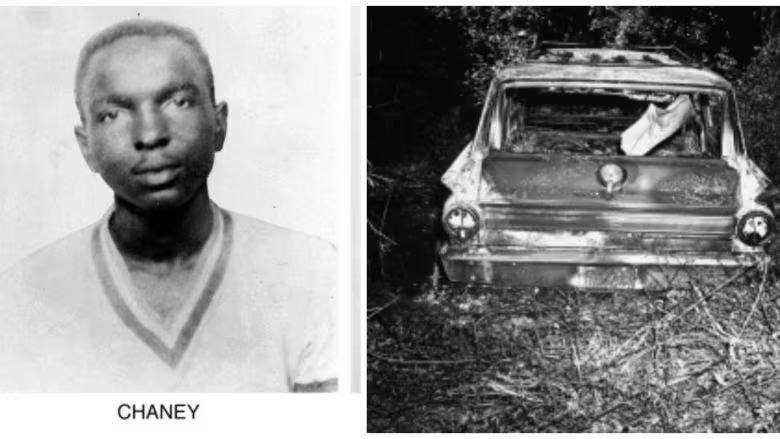
James Chaney a 21 year old African American from Meridian, Mississippi, was a dedicated civil rights activist whose life was tragically cut short in 1964 during one of the most infamous episodes of racial violence in American history. Chaney worked with the Congress of Racial Equality (CORE), focusing on voter registration drives and community organization in the deeply segregated South, where Black citizens faced systemic discrimination, intimidation, and violence. He was known for his courage and commitment to justice, risking his own safety to help others claim their rights.
In the summer of 1964, a campaign known as Freedom Summer brought volunteers from across the country to Mississippi to assist in registering Black voters and establishing community centers. Chaney, along with two white activists from New York, Andrew Goodman and Michael Schwerner, traveled to Neshoba County, Mississippi, to investigate the burning of a Black church in the area. On June 21, 1964, the three men were stopped by local law enforcement in the town of Philadelphia, Mississippi, for a supposed traffic violation. After being held briefly, they were released into the night, only to be ambushed by members of the Ku Klux Klan who were supported by some local police. They were brutally beaten and murdered.
The disappearance of Chaney, Goodman, and Schwerner immediately sparked national outrage. Because Chaney was Black and his companions were white northerners, the case drew widespread media attention and forced the federal government to intervene in a state historically resistant to civil rights enforcement. The FBI launched a massive investigation, codenamed “Mississippi Burning,” deploying agents across the county to search for the men. Six weeks later, their bodies were discovered buried in an earthen dam, a grim testament to the violent resistance faced by civil rights workers in the South.
The murder of James Chaney highlighted the particular vulnerability of Black activists, who faced not only social and economic discrimination but also the constant threat of lethal violence in their own communities. While some of the Klan members involved were eventually convicted of civil rights violations in 1967, many escaped long-term punishment, reflecting the challenges of achieving justice in a deeply segregated region.
James Chaney’s death had a profound impact on the civil rights movement. It galvanized national support for civil rights legislation, helping to pave the way for the passage of the Civil Rights Act of 1964 and the Voting Rights Act of 1965. Today, Chaney is remembered not only as a martyr but as a symbol of courage and sacrifice. His work and ultimate sacrifice serve as a powerful reminder of the human cost of the struggle for equality, inspiring generations of activists to continue the fight for justice and civil rights in America.