
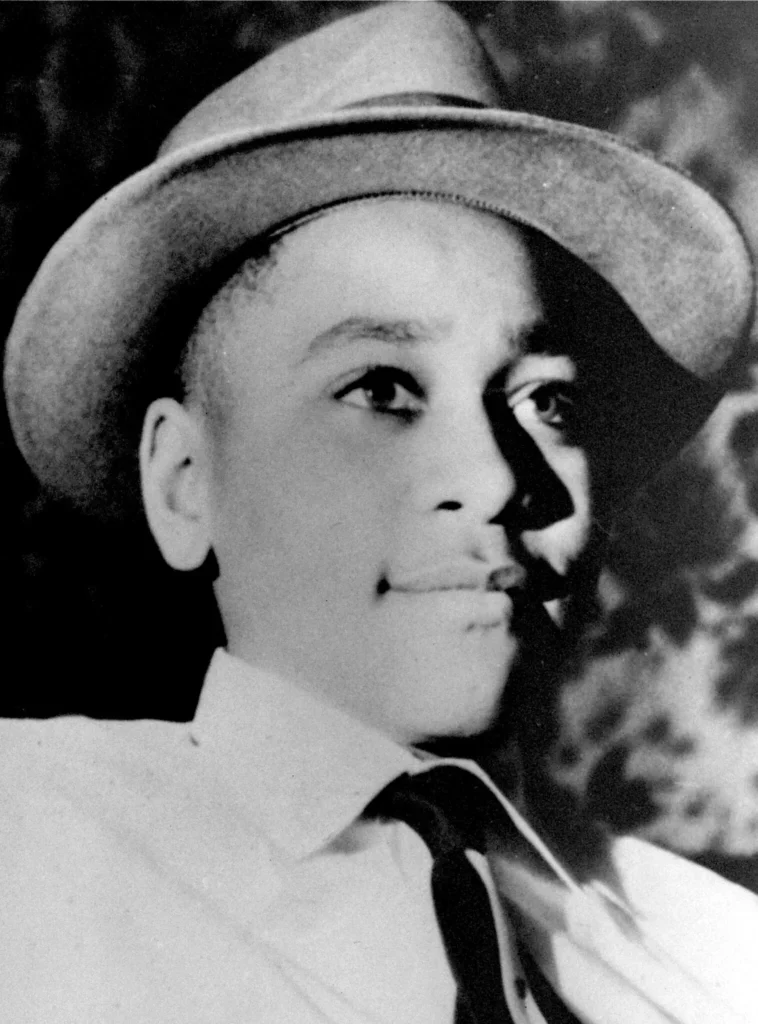
Emmett Till was a fourteen year old African American boy whose murder in 1955 became one of the most painful and powerful moments in American history. His death exposed the brutal reality of racism in the Jim Crow South and helped awaken the nation to the urgent need for civil rights reform. The violence committed against him and the failure of the justice system to hold his killers accountable left a lasting mark on the country and continues to be remembered decades later.
Emmett Louis Till was born on July 25, 1941, in Chicago, Illinois. He was raised by his mother, Mamie Till Mobley, who was deeply protective of her only child. Emmett grew up in the North, where racial segregation existed but was not enforced as violently as it was in the South. In August of 1955, Emmett traveled to Money, Mississippi, to spend time with relatives, including his great uncle Mose Wright. His mother warned him about the strict racial rules in the South, emphasizing the dangers Black people faced there.
While visiting Mississippi, Emmett entered a small grocery store owned by a white family. Inside the store was Carolyn Bryant, a white woman. Accounts vary about what happened, but Emmett was accused of whistling at her or speaking in a way that was considered inappropriate under the racist social codes of the time. Even this alleged act was seen as a serious offense in the segregated South and quickly spread through the local white community.
Several nights later, Roy Bryant, Carolyn Bryant’s husband, and his half brother J W Milam arrived at Mose Wright’s home late at night. They forced Emmett out of bed at gunpoint and took him away. Despite pleas from his family, the men drove Emmett to a remote area where they brutally beat him. He was tortured, shot in the head, and tied to a heavy cotton gin fan with barbed wire. His body was then thrown into the Tallahatchie River.
When Emmett’s body was discovered days later, it was severely mutilated and nearly unrecognizable. Authorities initially wanted to bury him quickly in Mississippi, but Mamie Till Mobley demanded that her son’s body be returned to Chicago. She made the courageous decision to hold an open casket funeral so the world could see the violence inflicted on her child. Thousands of people attended the funeral, and photographs of Emmett’s body were published in Black newspapers and circulated nationwide.
The trial of Roy Bryant and J W Milam took place in September of 1955. Despite overwhelming evidence and testimony, including a brave identification by Mose Wright in open court, the all white jury acquitted both men after deliberating for just over an hour. The verdict caused outrage across the country and further revealed how deeply racism was embedded in the American legal system. Months later, the men openly admitted to murdering Emmett Till in a paid magazine interview, knowing they could not be retried due to double jeopardy laws.
Emmett Till’s murder became a turning point for the civil rights movement. His death deeply affected Black communities and activists across the nation. Rosa Parks later said that she thought of Emmett Till when she refused to give up her seat on a Montgomery bus later that same year. His story fueled protests, organizing, and demands for justice that would grow into a nationwide movement for equality and civil rights.
In the decades that followed, Emmett Till’s case continued to resurface as new evidence and testimony emerged. In later years, Carolyn Bryant recanted parts of her original story, admitting that some of her claims were false. The case was reopened multiple times by federal authorities, reflecting the lasting impact of Emmett’s death and the ongoing search for truth and accountability.
Today, Emmett Till is remembered not only as a victim of racial violence but as a symbol of the countless lives affected by injustice. His story serves as a reminder of the dangers of hatred and the importance of standing against racism. The legacy of Emmett Till continues to influence conversations about civil rights, justice, and equality in America, ensuring that his life and death are never forgotten