
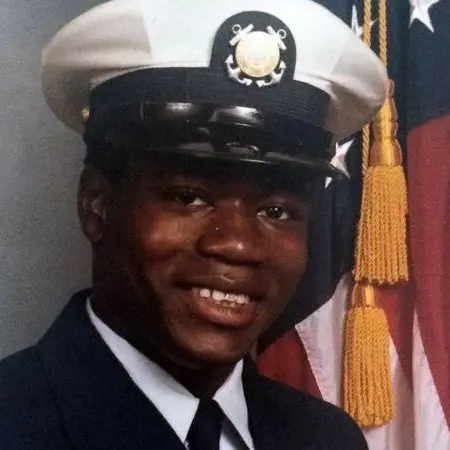
The death of Walter Scott, a 50 year old Black man in North Charleston, became one of the most powerful and widely recognized cases in the modern conversation about policing and accountability in the United States. His killing on April 4, 2015, did not just spark outrage, it forced the nation to confront uncomfortable truths about race, use of force, and the role of evidence in the pursuit of justice.
Walter Scott was a father and a member of his community, known by family and friends as a quiet and hardworking man. On the morning of April 4, he was driving his vehicle when he was pulled over by a police officer for what was later reported as a broken brake light. The officer involved, Michael Slager, approached Scott’s car in what initially appeared to be a routine traffic stop. Encounters like these happen every day across the country, often ending without incident. But in this case, the situation would escalate into a tragedy that would capture national attention.
During the stop, something shifted. Scott exited his vehicle and began to run away from the officer. Later reports suggested that he may have feared arrest due to outstanding issues related to unpaid child support. Whatever the reason, his decision to flee set off a chain of events that would end his life within moments. Officer Slager pursued him on foot, closing the distance between them as they moved into a nearby open area.
At some point during the pursuit, there was a brief physical encounter. Slager deployed his taser, and the two men appeared to struggle. However, the exact nature of that struggle would later become a central issue in the investigation. What happened next was captured in a way that would ultimately define the case.
As Scott broke free and continued to run away, Slager drew his firearm. Standing several feet behind Scott, the officer fired eight shots. Five of those bullets struck Scott, most entering from behind. Scott fell to the ground, face down, in a grassy area not far from where the traffic stop had begun. He died at the scene, unarmed and far from the officer at the moment the shots were fired.
In the immediate aftermath, Slager reported that he had feared for his life. He claimed that Scott had taken control of his taser during their struggle and that he felt threatened. This account initially shaped the early understanding of the incident. Without additional evidence, it might have remained the official version of events.
A bystander named Feidin Santana had recorded the encounter on his cellphone from a distance. The footage showed Scott running away from the officer when the shots were fired. It did not support the claim that Scott posed an immediate deadly threat at that moment. The video also appeared to show Slager walking back toward Scott’s body and dropping an object nearby, which raised serious concerns about the accuracy and honesty of his initial report.
When Santana came forward and released the video, it quickly spread across news outlets and social media. The visual evidence was undeniable. It contradicted the officer’s account and shifted public perception almost instantly. What might have been seen as a justified shooting was now viewed by many as an unjustified use of deadly force.
The reaction was swift. Slager was arrested and charged with murder. He was terminated from the North Charleston Police Department. The case became part of a larger national conversation about police shootings involving Black men, joining other high profile incidents that had already sparked protests and calls for reform.
As the legal process moved forward, the case drew intense scrutiny. In 2016, Slager stood trial in a South Carolina courtroom on state murder charges. The trial was closely watched, with many seeing it as a test of whether the justice system would hold a police officer accountable for the killing of an unarmed Black man. After weeks of testimony and deliberation, the jury was unable to reach a unanimous decision. A mistrial was declared, leaving the case unresolved at the state level.
Despite the mistrial, the pursuit of justice continued. Federal prosecutors stepped in and charged Slager with violating Scott’s civil rights. Facing overwhelming evidence, including the video that had already changed the course of the case, Slager ultimately chose to plead guilty in 2017. He admitted to using excessive force and depriving Scott of his constitutional rights.
Later that year, he was sentenced to 20 years in federal prison. The sentence was seen by many as a significant moment of accountability, though for Scott’s family, no legal outcome could truly make up for their loss.
Alongside the criminal proceedings, Scott’s family pursued a civil case against the city. In 2015, the City of North Charleston reached a $6.5 million settlement with the family. While financial compensation could never replace Walter Scott, the settlement represented an acknowledgment of wrongdoing and a step toward some form of closure.
The impact of Walter Scott’s death extended far beyond the courtroom. His case became a symbol of the importance of transparency and the power of video evidence. Without the footage captured by Santana, the truth of what happened that day might never have been fully known. The case highlighted how critical citizen recordings can be in holding authority accountable.
In the wake of the shooting, changes were implemented. Police departments across the country, including in North Charleston, began to expand the use of body cameras. Lawmakers and community leaders pushed for reforms aimed at increasing accountability and rebuilding trust between law enforcement and the communities they serve.
Walter Scott’s death also became part of a broader movement demanding justice and equality. His name was spoken alongside others in protests and conversations about systemic issues in policing. For many, his story represented not just one tragedy, but a pattern that needed to be addressed.
At his core, Walter Scott was more than a headline. He was a man with a life, a family, and a story that did not deserve to end the way it did. Those who knew him remembered him as kind and human, not as the figure he became in a national debate. His death forced a country to pause and reflect, to question, and to demand better.
Years later, the case remains a powerful reminder of how quickly a routine encounter can turn deadly, and how essential truth and accountability are in a just society. The video that captured his final moments ensured that his story would not be buried or ignored. Instead, it became a turning point, one that continues to influence conversations about justice, race, and the value of human life in America.
Walter Scott’s story is not just about loss. It is about exposure, awakening, and the ongoing fight for fairness. It stands as a reminder that justice is not automatic, it must be pursued, protected, and demanded.