
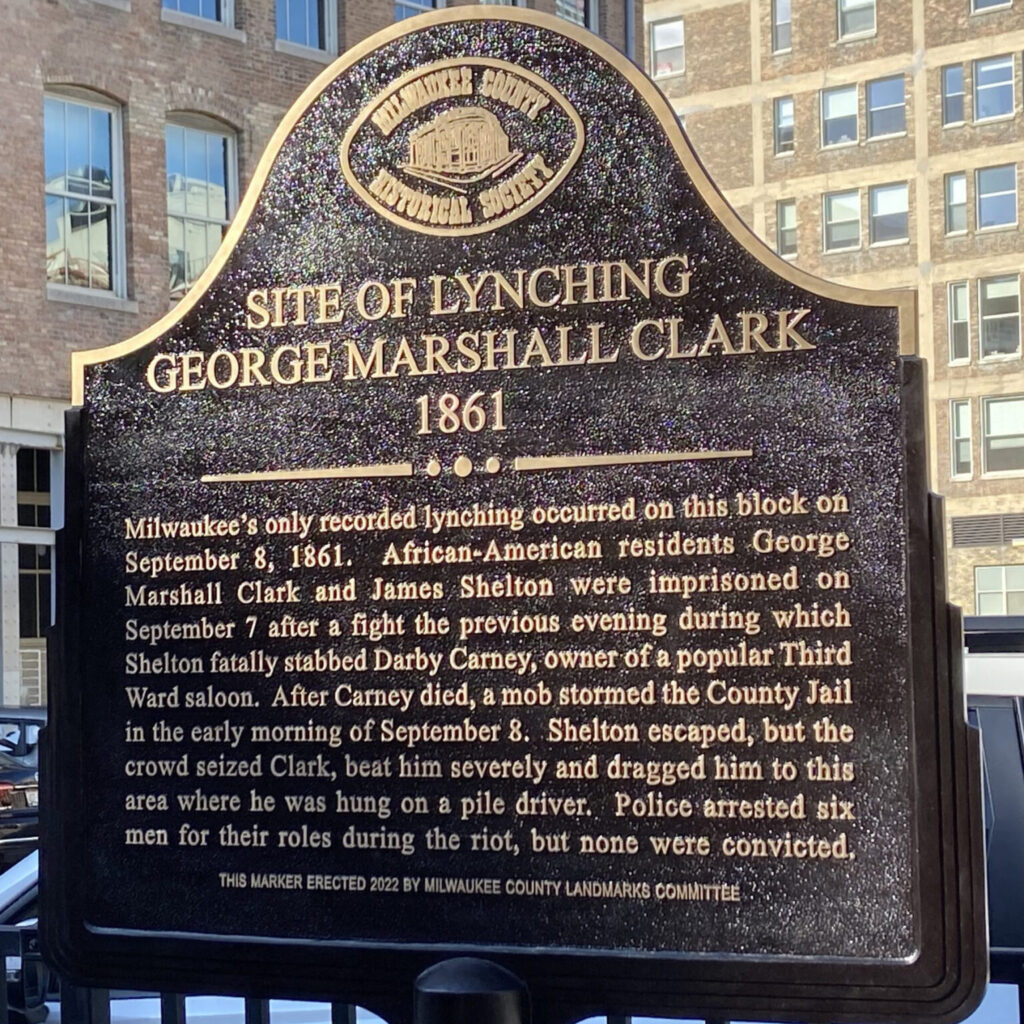
George Marshall Clark was an African American man who was lynched on September 6, 1861, in Henderson, Texas, during the early months of the American Civil War. His death occurred in a period marked by extreme racial fear, political instability, and widespread violence following Texas’s secession from the United States. As the Confederate cause took hold, white communities across East Texas increasingly relied on terror and mob violence to enforce slavery and racial control.
At the time, Texas was gripped by hysteria over rumored slave uprisings. White residents feared that enslaved and free Black people were plotting rebellions, often believing that abolitionists or Union supporters were secretly encouraging resistance. These fears were rarely based on credible evidence but were instead fueled by rumors, newspapers, and public meetings that stoked panic. In many cases, simple acts such as speaking openly, traveling, or being perceived as intelligent or assertive were enough to make a Black person a target.
George Marshall Clark was accused of being connected to one of these alleged insurrection plots. The exact details of the accusation remain unclear, which is common in cases of racial violence from this era. Black victims were seldom afforded the dignity of a full historical record, and their voices were erased by those who controlled the narrative. What is known is that Clark was never given a fair investigation or trial. Instead, he was taken by a white mob that assumed his guilt without evidence.
Clark was publicly lynched, an act intended not only to kill but to terrorize. Public lynchings served as warnings to Black communities, reinforcing the message that any challenge to the racial order would be met with brutal consequences. These acts were meant to instill fear, silence resistance, and maintain white dominance, especially during a time when the institution of slavery felt threatened by national conflict.
His killing was part of a broader wave of violence across East Texas in 1861. During this period, dozens of Black men were whipped, tortured, hanged, or shot, often alongside white men who were suspected of being abolitionists. In many cases, accusations were based solely on hearsay. Legal systems either supported these actions or stood aside, allowing mobs to act freely. Law enforcement and local officials often participated in or openly endorsed the violence.
George Marshall Clark’s lynching reveals how quickly law and order collapsed when racial power was challenged. Due process did not exist for Black people, whose lives were considered disposable in the service of preserving slavery. Even the possibility of resistance was enough to justify execution in the eyes of white mobs. Clark’s death illustrates how fear was weaponized and how racial terror became an accepted method of governance.
Remembering George Marshall Clark is important because it forces a confrontation with the early roots of lynching in American history. His death occurred decades before the height of lynching in the late nineteenth and early twentieth centuries, showing that racial terror was deeply embedded long before Reconstruction ended. The violence inflicted upon him reflects a system designed to deny Black humanity and enforce silence through brutality.
Although much about George Marshall Clark’s life has been lost to history, his death stands as a reminder of the countless Black men and women whose lives were taken without justice or accountability. Acknowledging his story honors not only his memory but also the truth of a past that shaped generations. Remembering victims like Clark helps ensure that their suffering is not forgotten and that the history of racial violence in America is told honestly and completely.