
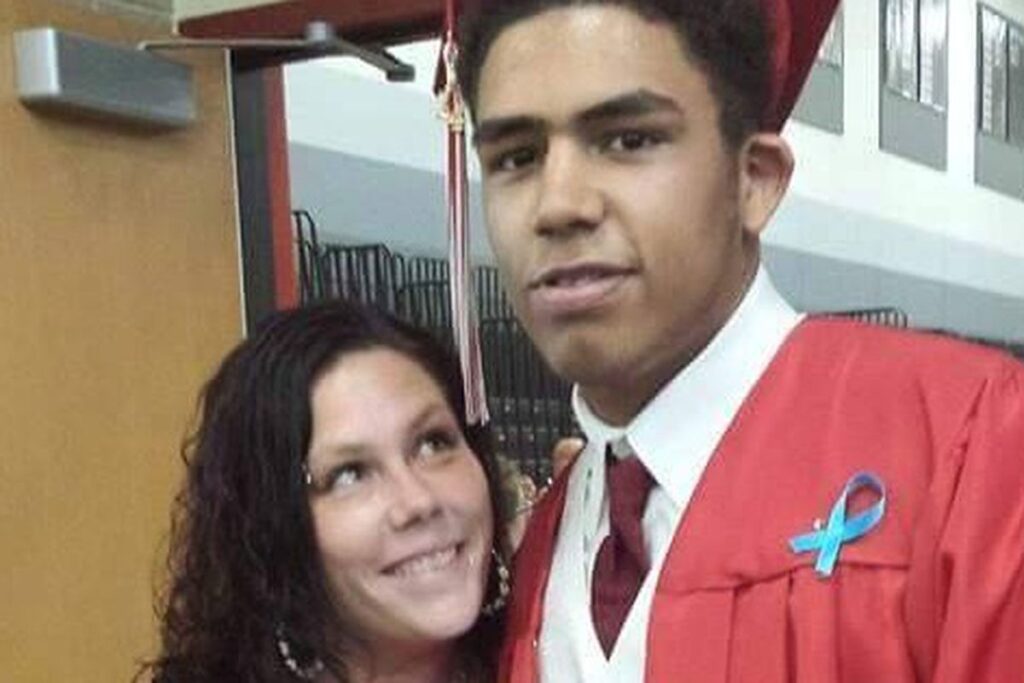
Tony Terrell Robinson Jr. was only 19 years old when his life was cut short on March 6, 2015, in Madison, Wisconsin. His death at the hands of a police officer shocked the local community, sparked days of protests, and became part of the national conversation about police use of force, mental health, and the treatment of young Black men in encounters with law enforcement.
Tony Robinson was born on November 19, 1995. He grew up in Madison and attended Sun Prairie High School, where he graduated early. Family members, friends, and teachers described him as energetic, intelligent, and full of personality. He was known for his bright smile, his love for music, and his ability to make others laugh. Those close to him said he had dreams for his future and was working toward building a better life.
On the evening of March 6, Madison police received multiple 911 calls reporting a young man acting erratically near Williamson Street, a busy area on the city’s east side. Callers reported that the individual was jumping into traffic, running in and out of the street, and had allegedly assaulted someone. One of the calls came from a friend who knew Robinson and was concerned about his behavior, hoping that authorities could get him help.
Officer Matt Kenny of the Madison Police Department was dispatched to the scene at approximately 6:30 p.m. According to dispatch information, the subject was reportedly unarmed but behaving unpredictably. By the time the officer arrived, Robinson had entered an apartment building at 2026 Williamson Street, where he lived with roommates.
After entering the building, Officer Kenny reported hearing what he described as a disturbance coming from inside the apartment. Believing that someone might be injured or in danger, he forced entry into the residence. According to the officer’s account and the state investigation, Robinson confronted him shortly after he entered.
The encounter happened quickly in a narrow stairwell. Investigators later reported that Robinson struck Officer Kenny in the head during the confrontation. The officer stated that he feared Robinson might overpower him and potentially gain control of his firearm. Within seconds of the physical struggle, Officer Kenny fired his weapon seven times at close range, striking Robinson multiple times in the upper body.
Emergency medical aid was provided at the scene, and Robinson was transported to a local hospital. Despite efforts to save him, he was pronounced dead later that evening. Authorities later confirmed that Robinson was unarmed at the time of the shooting.
The Wisconsin Department of Justice Division of Criminal Investigation conducted an independent investigation into the incident. Toxicology results later showed that Robinson had hallucinogenic mushrooms, marijuana, and Xanax in his system. Investigators suggested that these substances may have contributed to his erratic behavior that night.
In May 2015, Dane County District Attorney Ismael Ozanne announced that no criminal charges would be filed against Officer Kenny. The district attorney concluded that the officer’s use of deadly force was justified under Wisconsin law, which allows officers to use lethal force if they reasonably believe their life or the lives of others are in danger. The Madison Police Department also conducted an internal review and determined that the officer had not violated department policy.
Despite the legal findings, the shooting deeply affected the Madison community. Hundreds of people took to the streets in the days following Robinson’s death, holding marches, vigils, and protests. Demonstrators questioned whether lethal force was necessary against an unarmed teenager and called for greater accountability, transparency, and changes in police training and use-of-force policies.
Community leaders, activists, and Robinson’s family also raised concerns about how law enforcement responds to individuals experiencing mental health or substance-related crises. Many argued that situations like Robinson’s required de-escalation techniques or specialized crisis response teams rather than a traditional police approach.
Tony Robinson’s death became part of the broader national discussion taking place at the time about police shootings, racial disparities, and the need for reform. His name was mentioned alongside other high profile cases that prompted communities across the country to examine the relationship between law enforcement and the people they serve.
In the years following the shooting, Robinson’s family and supporters continued to honor his memory through community events, memorials, and advocacy efforts. They emphasized remembering him not just for how he died, but for who he was—a young man with a future, a family who loved him, and a life that mattered.
The death of Tony Robinson remains a painful chapter in Madison’s history. It highlights the complex challenges that can arise when law enforcement encounters someone in crisis and continues to raise important questions about training, accountability, and the need for systems that prioritize both public safety and human life.
Though his life ended at just 19 years old, Tony Robinson’s story continues to influence conversations about policing, community trust, and the importance of finding better ways to respond to people in distress before situations turn tragic.