
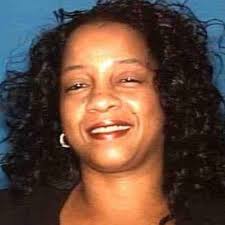
Yvette Smith was a 47 year old woman whose life was tragically cut short on February 16, 2014, in Bastrop County, Texas. Her death became one of the most widely discussed police shooting cases in the state and drew national attention during a period of increasing scrutiny over law enforcement use of deadly force.
On that Sunday evening, deputies from the Bastrop County Sheriff’s Office responded to a 911 call reporting a disturbance between Smith’s son and a neighbor. The disagreement reportedly involved a fight between young men, and tensions were high in the neighborhood. Smith was inside her home when deputies arrived. According to later accounts, she stepped outside after hearing the commotion and seeing patrol vehicles pull up in front of her house.
Within seconds of arriving, Deputy Daniel Willis exited his patrol vehicle with his weapon drawn. Almost immediately after stepping out, he fired a single shot. The bullet struck Yvette Smith in the abdomen. She was unarmed and standing near the doorway of her home. She later died from her injuries.
In the immediate aftermath, early statements from authorities suggested that Smith had approached deputies in a threatening manner, leading the officer to fear for his safety. However, as more information surfaced, those claims were called into question. Dashcam footage from the patrol car reportedly showed that the deputy fired very quickly after arriving, without issuing clear verbal commands or giving Smith time to respond. Witnesses also stated that Smith did not act aggressively and that she posed no visible threat.
The Texas Rangers launched an independent investigation into the shooting. As details emerged, community members and civil rights advocates demanded transparency and accountability. Many pointed to the speed of the shooting and the fact that Smith was unarmed as evidence that excessive force had been used.
In December 2014, a grand jury indicted Deputy Daniel Willis on a charge of murder. The indictment marked a rare moment in which a law enforcement officer faced serious criminal charges for an on duty shooting in Texas. The case moved to trial in 2015.
During the trial, prosecutors argued that the deputy acted recklessly and without proper justification. They emphasized the short time frame between the deputy’s arrival and the fatal shot. The defense argued that Willis believed he was responding to a potentially dangerous situation and that he feared someone might have been armed.
Ultimately, the jury did not convict Willis of murder. Instead, he was found guilty of criminally negligent homicide, a lesser charge. He was sentenced to five years in prison. The conviction was significant, as it demonstrated that a jury found his actions to fall below the standard of care expected of a reasonable officer. However, for Smith’s family, the verdict was a mixture of sorrow and partial relief. While there was accountability, the outcome could not bring back their loved one.
Yvette Smith’s death occurred at a time when national conversations about police use of force were intensifying. Her case became part of a broader discussion about how quickly officers resort to deadly force, especially in encounters involving unarmed civilians. Advocates highlighted the importance of improved training, de escalation techniques, and stronger oversight mechanisms to prevent similar tragedies.
For her family, the legal process was only one part of the story. They described Yvette Smith as a caring mother and community member who had simply stepped outside her own home. They have continued to remember her not just as a victim in a high profile case, but as a woman whose life mattered deeply to those who knew her.
The death of Yvette Smith remains a sobering example of how rapidly an encounter between police and civilians can turn fatal. It underscores the ongoing need for transparency, accountability, and meaningful reform in law enforcement practices to ensure that tragedies like this do not continue to occur.